Picture Clue Trail
Non-readers follow picture clues to the next location.
Age range4-6
Duration15 mins
Materials
- • Picture clue cards
15 mins4-6
Plan scavenger hunts for parties with picture clues, printable checklists, team challenges, and an indoor or outdoor route for children aged 4 to 10.
Need a full party flow?
Use the Party Schedule Builder to plan arrival games, themed activities, food breaks, and calm endings.
Use the Party Schedule BuilderParty games
Non-readers follow picture clues to the next location.
Materials
Teams race to find items on a printable scavenger list.
Materials
Teams find one safe object for each colour or shape without moving or collecting it.
Materials
One teammate reads a short riddle before the group walks together to the next clue point.
Materials
Children notice textures, sounds, letters, and patterns, then tick them without using a phone.
Materials
The final clue brings every team together at a box with equal party bags or one shared prize.
Materials
Planning tips
Walk the route before party day to check hiding spots.
Number clues so you can reset quickly if needed.
Keep a master clue list and route map with the supervising adult.
Use teams rather than elimination so every child reaches the final clue.
Set a visible boundary and explain which rooms or outdoor areas are out of bounds.
Prepare an indoor printable hunt in case weather or venue access changes.
At-home activities that pair well with this party theme.
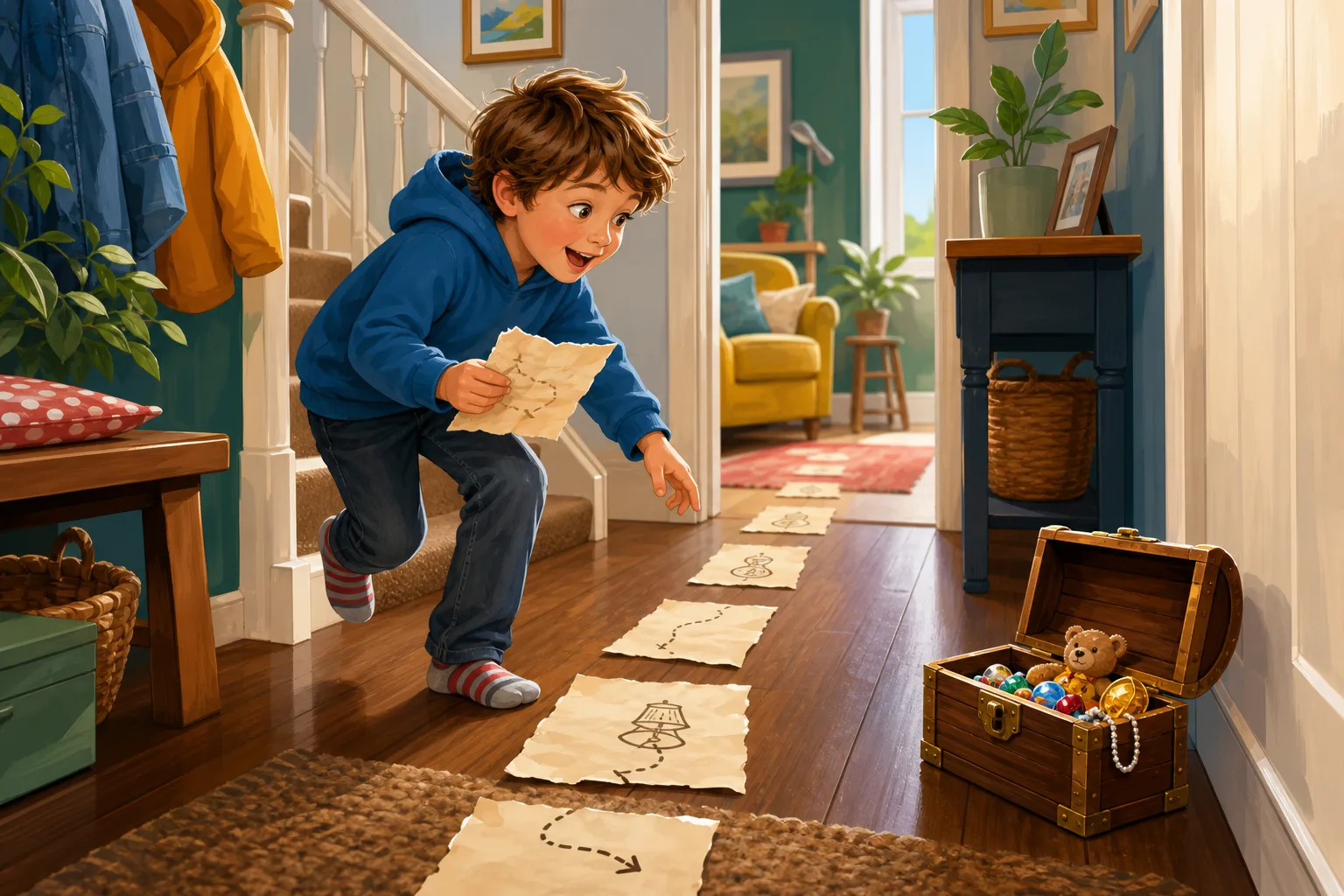
A flexible clue hunt that works in a flat, house, classroom, or hall when outdoor plans are cancelled by UK weather.
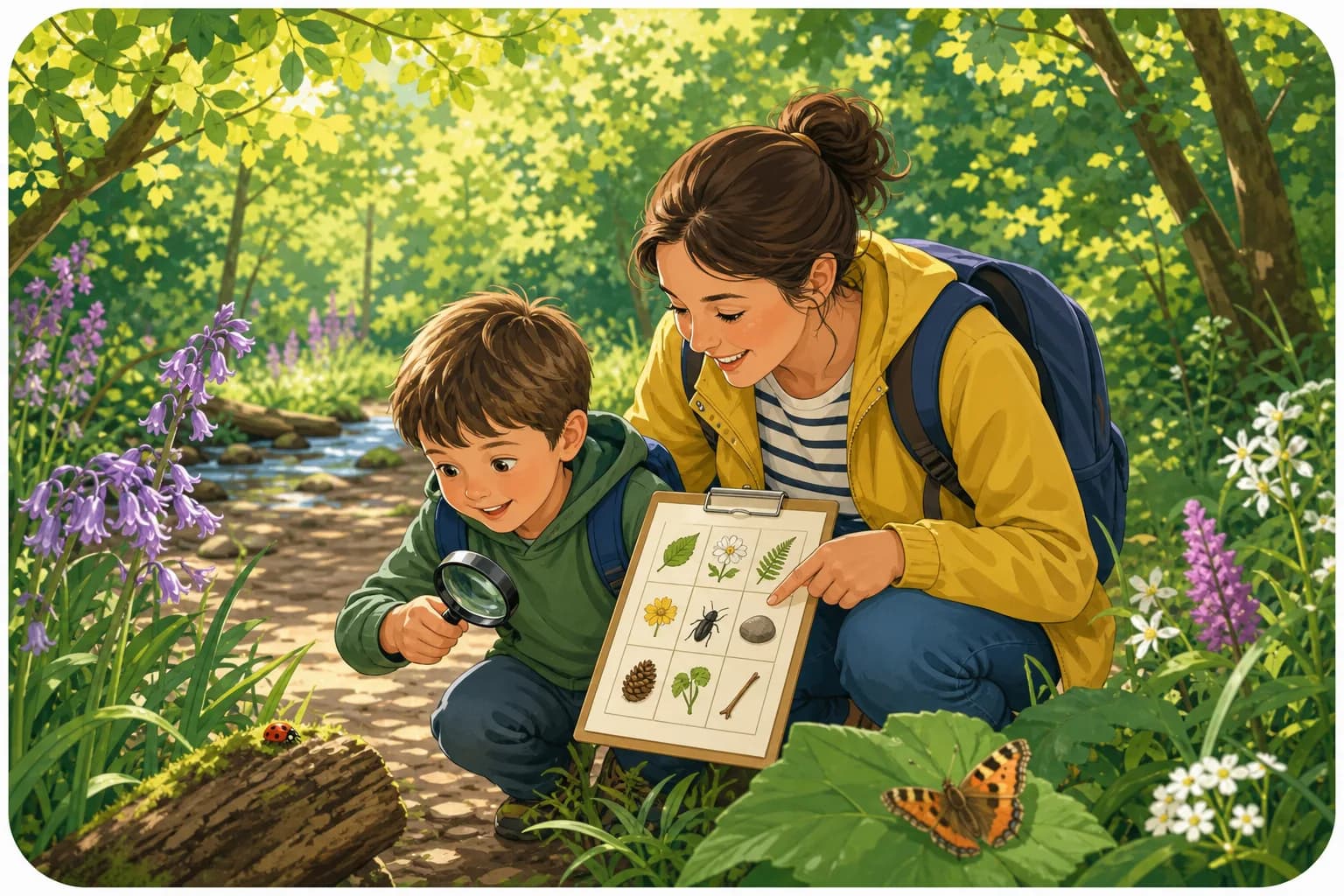
A simple outdoor checklist for spotting leaves, birds, textures, and colours on UK park walks and woodland trails.
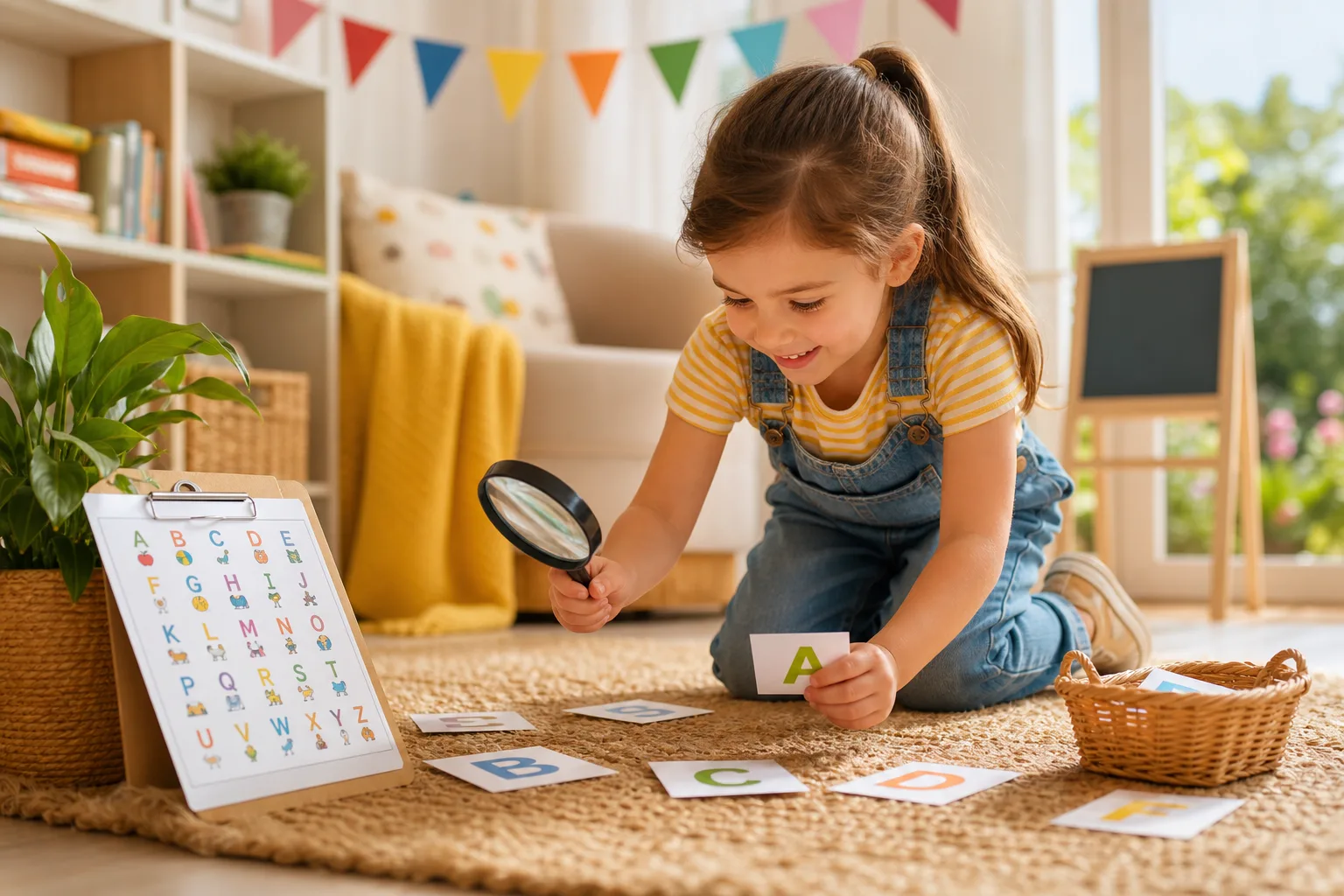
Find objects beginning with each letter of the alphabet indoors or outdoors.
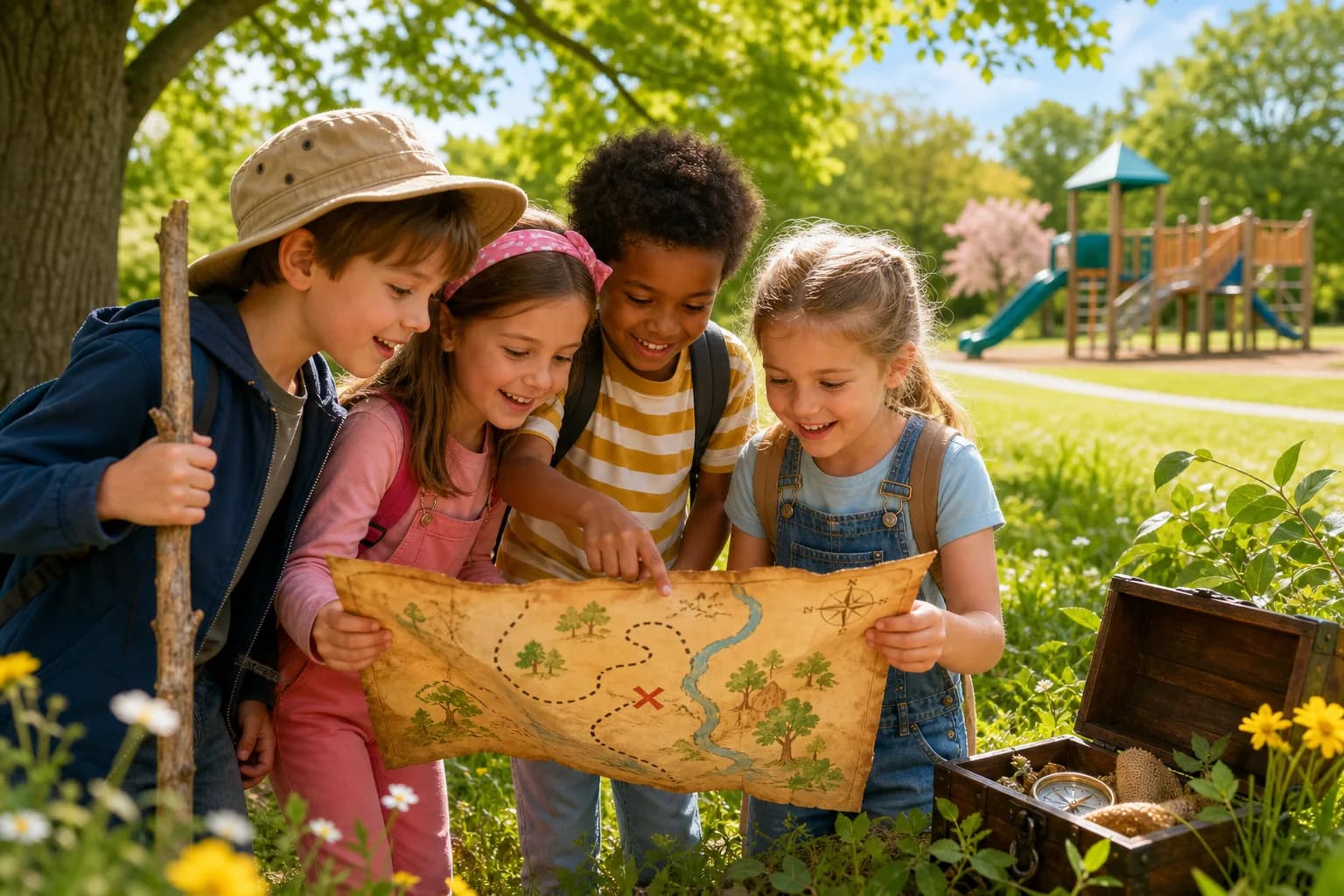
Draw a simple treasure map of a park route with landmarks and a hidden prize.
Printable games and packs for party day.
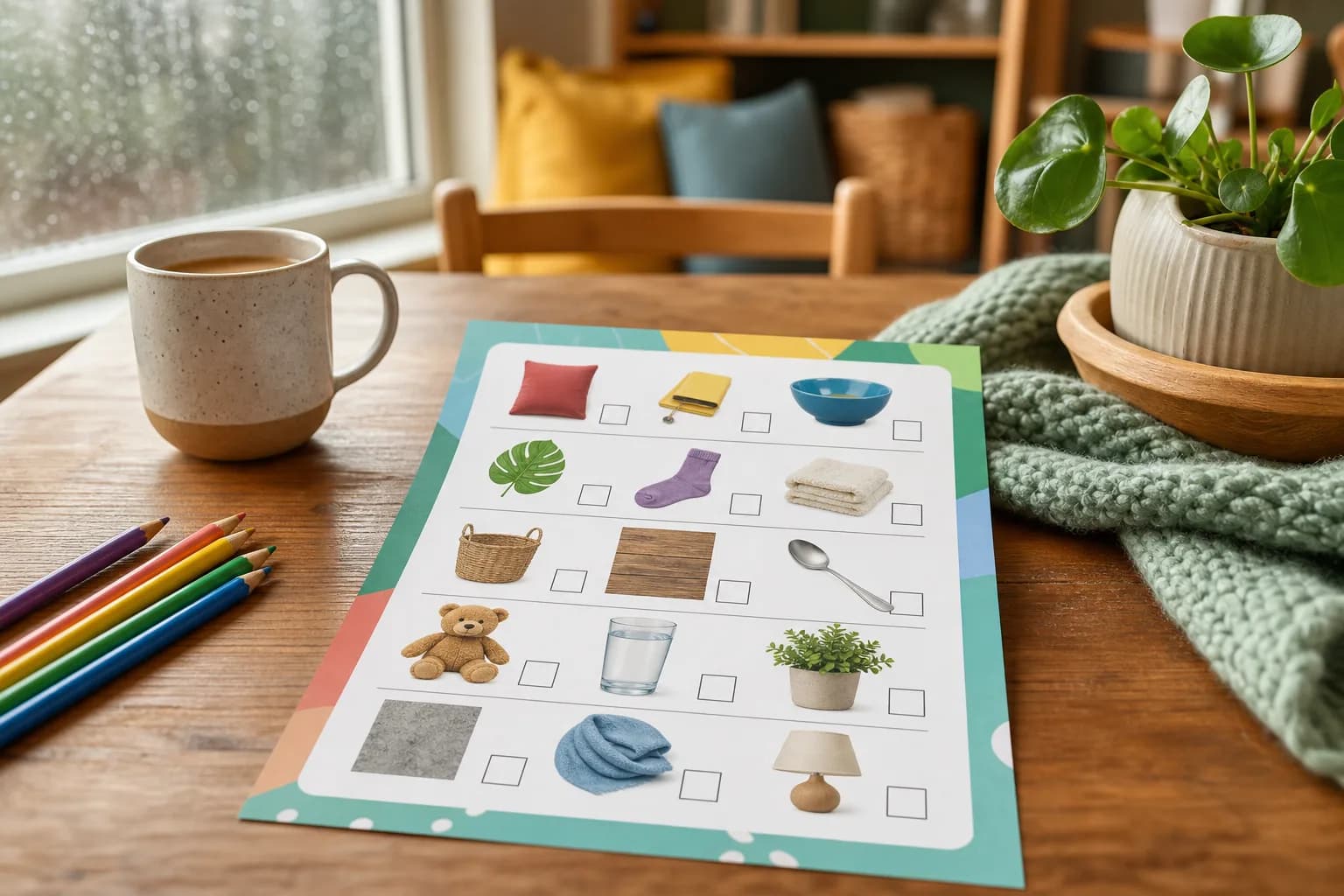
Scavenger Hunt
A simple indoor hunt sheet for finding colours, textures, shapes, and safe household objects on rainy UK days.
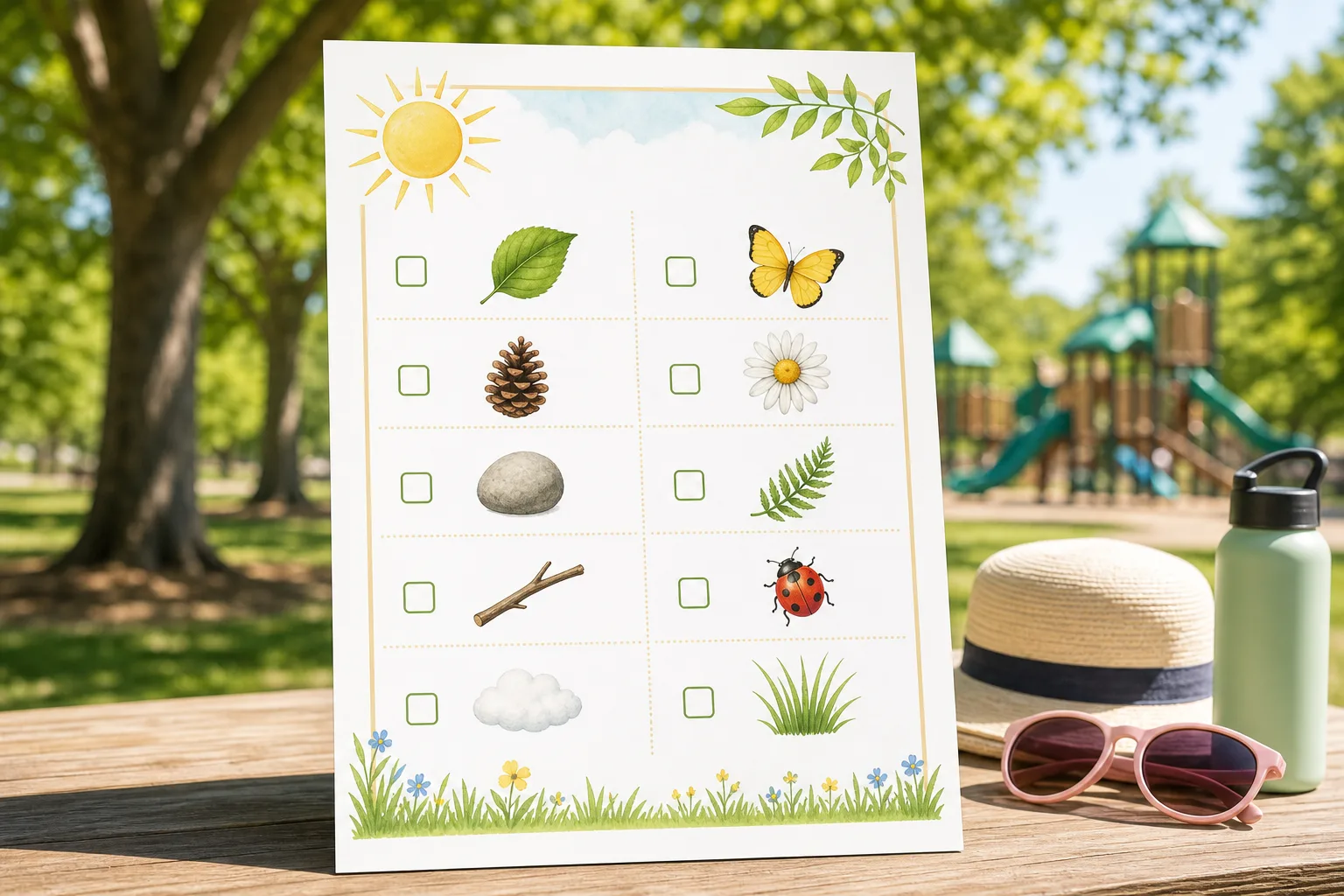
Scavenger Hunt
A bright outdoor checklist for park walks, gardens, and sunny half-term adventures.
Scavenger Hunt
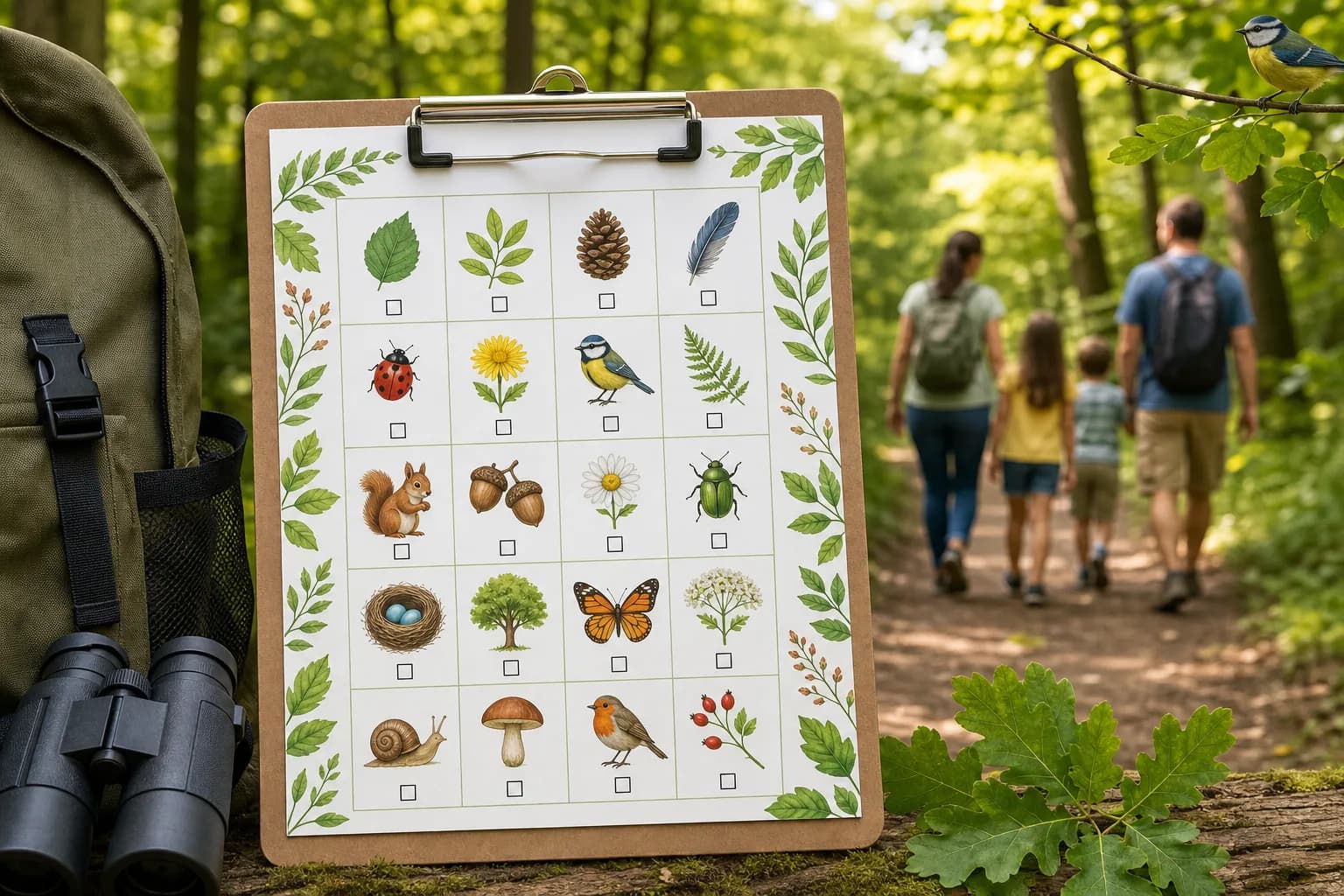
A nature spotting checklist for parks, woods, gardens, and local walks.
Party Game
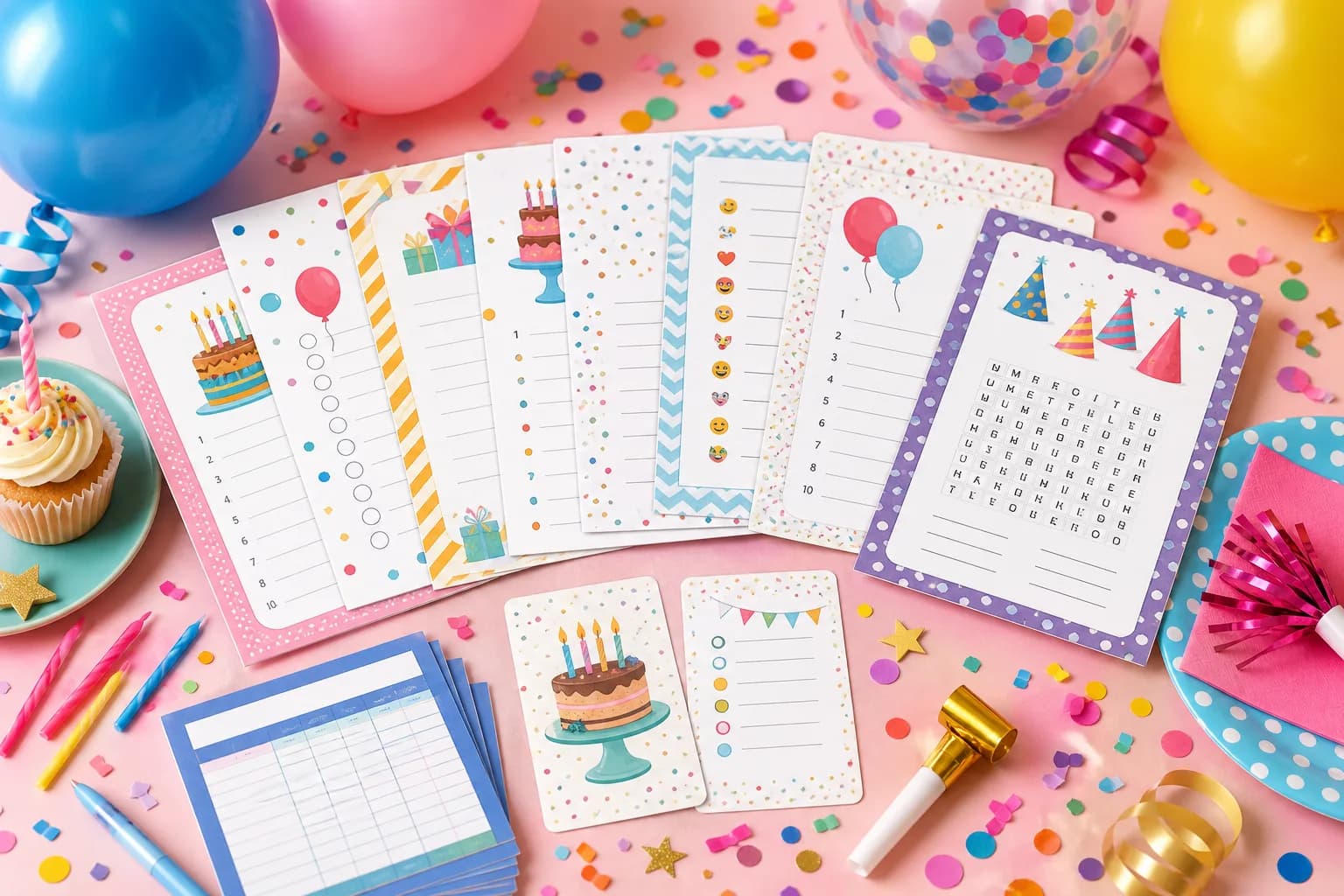
Printable party games, score sheets, clue cards, and calm-down activities.
Use one clear route rather than several overlapping hunts. Begin with a five-minute picture or colour warm-up, run the main clue trail in teams of three or four, then bring everyone together for one shared final treasure. Number every clue and keep a route copy with the supervising adult.
Indoor hunts suit flats, halls, winter birthdays, and rainy backups; use furniture-level clues and avoid stairs or private rooms. Garden hunts allow longer observation lists inside a secure boundary. Park hunts need more adults, an agreed meeting point, and clues that do not require children to collect plants or approach strangers.
For ages 4 to 6, use photographs, colours, shapes, and one instruction per card. For ages 7 to 10, mix short riddles, map symbols, number codes, and observation prompts. In mixed-age teams, give the youngest child the picture-finding role and rotate the reader or clue-holder role.
Allow 10 minutes for arrivals and a picture-clue warm-up, 25 minutes for the main team trail, 15 minutes for food and drinks, 10 minutes for a short second hunt or relay, and 15 minutes for the final reveal, cake, and pickup. Keep one printable table game ready if the main hunt finishes early.
FAQs
Picture clue trails, team checklist hunts, colour searches, simple riddles, and a shared treasure finale work well. Choose two or three formats rather than trying to run every idea in one party.
Both work. Indoor hunts suit flats, halls, winter birthdays, and rainy days. Garden or park hunts provide more space but need clear boundaries, more supervision, and a weather backup.
Six to ten clues is usually enough for a 15-to-25-minute main hunt. Use fewer picture clues for younger children and slightly harder riddles for older primary-age teams.
Create teams with an older reader and give younger children a picture, colour, or object-finding role. Rotate who carries the clue card so one child does not control the whole hunt.
Use equal party bags, stickers, or one shared box of small items. Avoid winner-only prizes when teams are following different clues or include children with different reading and mobility needs.
Adult supervision is recommended. Adapt all party games based on age, space, allergies, and the number of children attending.
Related ideas